
Insights
Writing on moral injury, decision fatigue, and the weight senior leaders carry in private. The first essays are on the way, and a book is coming.
Most people treat composure as something you either have or you don't. It isn't. Staying steady when the pressure is on is a skill you can build, like any other.
It matters because a leader's state is contagious. Walk into a tense room already steady, and people settle. Walk in rattled, and the room tightens, even when you say all the right things. The composure a leader brings, or fails to bring, sets the temperature for everyone else.
- From The Steward of Standards, M. Julius Owens's forthcoming book
The book lays out the thinking. Inside an engagement, it looks like this.
Before a hard call, the work helps a leader get steady first. A decision made in a reactive state looks nothing like one made from a settled one.
There's no fixed playbook. The work reads the real people, pressures, and institution in front of you, and advises from there.
Clinical training lets the work catch what a leader is carrying — decision fatigue, moral injury — and name it plainly before it quietly drives the decision.
Engagements are scoped around the decision in front of you, not a fixed number of sessions or a standing weekly appointment. Some are a single, focused conversation. Others run as a retainer, on call as the decisions come.
Holding a neutral face while you're seething isn't composure, it's suppression, and it carries a cost. Real regulation means feeling the pressure and still choosing your response.
Lead with "that won't work" and the other person hears a threat. Name where you agree first, then the specific concern, and the same disagreement lands as working the problem together.
The assistant who controls the calendar, the analyst who writes the briefing: they decide what moves and what stalls. Respect them early and things get done.
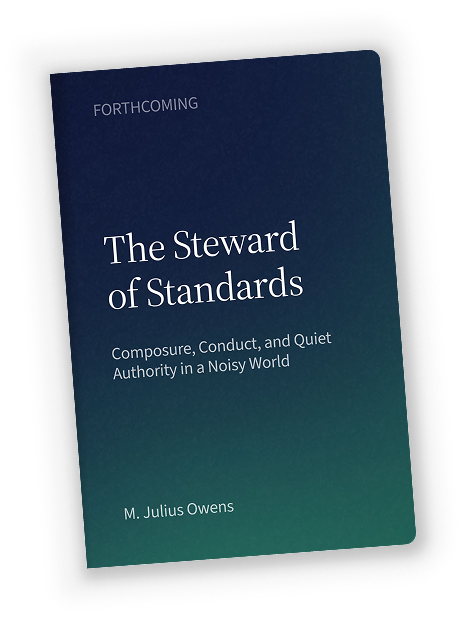
The essays here draw on M. Julius Owens's forthcoming book, The Steward of Standards: Composure, Conduct, and Quiet Authority in a Noisy World.
The same thinking runs through every engagement.
Engagements begin by referral and private inquiry. A limited number are taken on at a time. Tell us a little about your situation, and we'll follow up.
